

ABV Strain Tolerance: Yeast Parameters

Recently we’ve worked on a method to categorize our yeast strain's alcohol tolerance level more accurately. We developed a standardized method to give brewers a more quantifiable description. 

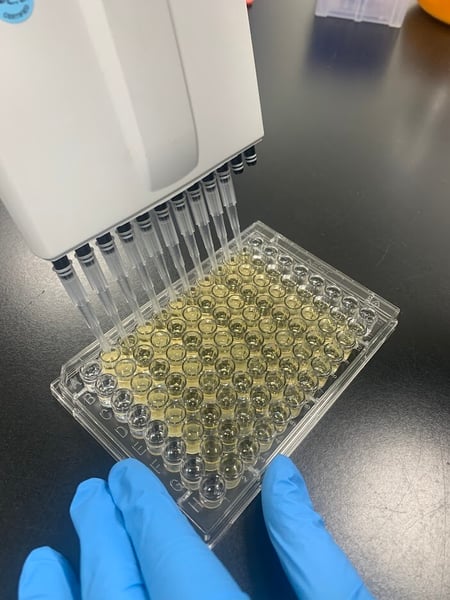
In this procedure, we use a media such as YPD and add ethanol in various percentages in a 96-well plate. Yeast is inoculated in each well at various levels, and the growth is measured on a microplate reader over 48 hours. 

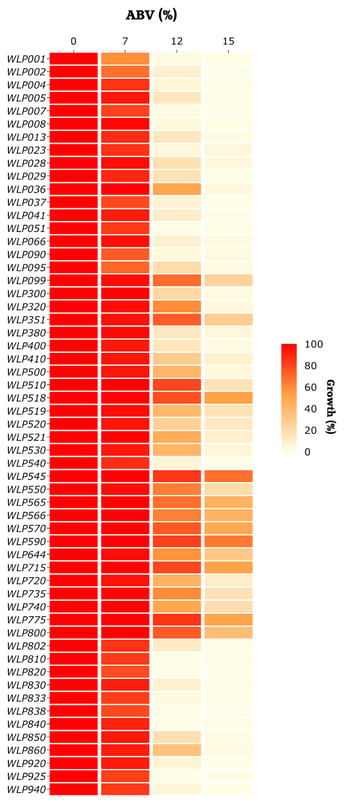
Below is a heatmap of our yeast strains and their growth at these alcohol levels. This has helped us determine whether they are high, med, or low-tolerant strains.  

Alcohol Tolerance 96 Well Plate

A few notes:

  • A highly tolerant strain does not indicate that it will attenuate more than another strain. It only reflects the ability of yeast to endure higher concentrations of ethanol.   
  • The ABV values here are not the highest a strain can endure. When yeast is inoculated directly into an ethanol solution rather than producing the ethanol itself, it usually has a lower tolerance than in a fermentation.

Alcohol Tolerance Heat Map

How to interpret this heatmap: 

  • As the color fades from red to beige to white, the alcohol tolerance goes down. 
  • For example, WLP545 Belgian Strong Ale Yeast has a high ABV tolerance, whereas WLP090 San Diego Super Ale Yeast has a relatively lower one. 
  • This does not mean a strain cannot reach 12% or 15% ABV in fermentation. We are simply using this assay to categorize strains using quantitative data.

Recent Posts

Featured image: Fermentation Controls: Yeast Health
PurePitch Next Generation
Yeast Health
Dec 15, 2025

Fermentation Controls: Yeast Health

Yeast health is critically important for building a successful brewing operation. It not only supports consistent, high-quality beer production, but also drives financial performance through shorter tank residency times, fewer off-target batches, and increased generational re-pitching of yeast cultures. We will explore what yeast health actually means, how to monitor it, and the key fermentation…

Read more
Featured image: Fermentation Controls: Temperature
PurePitch Next Generation
Dec 2, 2025

Fermentation Controls: Temperature

Temperature is one of the three key cold-side variables, along with pitch rate and dissolved oxygen, that brewers can control to influence fermentation performance and flavor. We’ll break down how temperature impacts yeast activity from knockout through the end of fermentation, and how dialing it in leads to consistent, predictable results. Knockout Take your yeast…

Read more
Featured image: Why Pitch Rate Matters (And How to Nail It Every Time)
Pitch Rate
Nov 18, 2025

Why Pitch Rate Matters (And How to Nail It Every Time)

Pitch rate is one of the most underrated levers in brewing, and yet it impacts everything from tank turns to ester profile to repitching health. When pitch rate fluctuates, so do fermentation speed, flavor, and your cellar schedule. Brewers can control multiple factors on the cold side. There are 3 key variables brewers can dial…

Read more