In modern brewing, the vast majority of beers are fermented using a narrow
selection of highly domesticated industrial yeast monocultures. However, recent genetic research has unlocked historical yeast populations preserved for
centuries by farmhouse brewers in Northern and Eastern Europe.
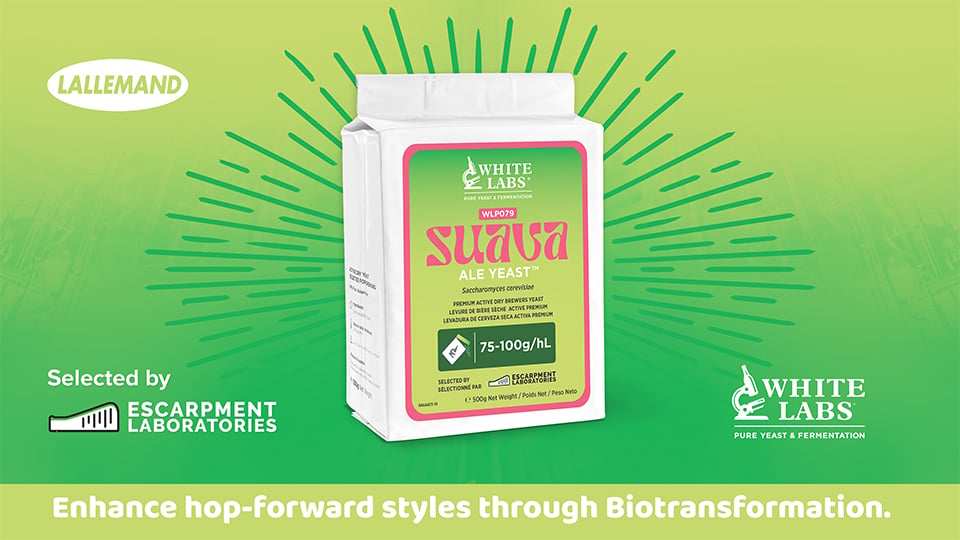
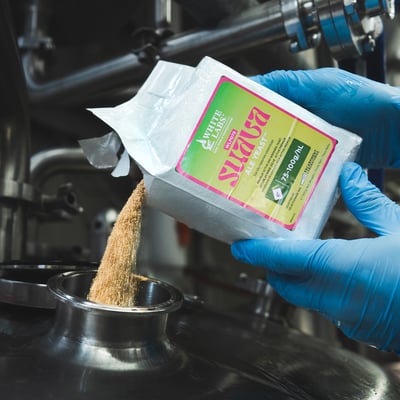
A prominent result of this research is WLP079 Suava Ale Yeast (referenced in
early developmental phases as EXP-666). Released specifically in a dry format,
this strain was developed to provide brewers with a non-GMO option that delivers controlled thiol expression and tropical aromatics in hop-forward beers.
Unlocking the European Farmhouse Clade
The journey of WLP079 began far from the conditions of a modern laboratory. For centuries, farmhouse brewers in rural Northern and Eastern Europe maintained traditional "landrace" or “farmhouse” yeasts through backslopping (reusing yeast from batch to batch) or drying it on wooden rings.
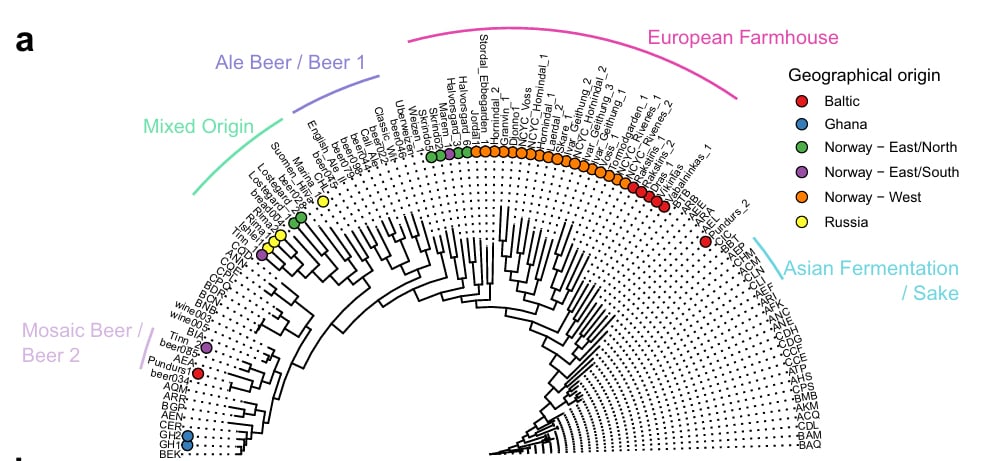
The European Farmhouse brewing yeast family. Reproduced from Preiss et al. 2024
In 2024, genomic research led by Escarpment Laboratories identified that these farmhouse yeasts form a unique, genetically distinct group called the European Farmhouse Clade. Evolving in farmhouse breweries for centuries, these cultures contain distinct genetic profiles that diverge completely from standard modern beer yeasts. Specifically, Suava’s parental strain was isolated from a traditional Southern Norwegian farmhouse yeast style known as "Berm" yeast, collected from the Upper Telemark region.
While the original yeast exhibited incredible ester and tropical thiol potential, it
required scientific optimization to survive and perform efficiently under modern brewery conditions.
Adaptive Lab Evolution: Taming the Wild
To prepare the Berm yeast for professional commercial brewing, the team at
Escarpment Laboratories utilized a natural, non-GMO technique called Adaptive Lab Evolution (ALE). The yeast was grown over many generations in a nutrient deficient, high-maltose wort. Crucially, they introduced Phantasm (a powdered New Zealand Sauvignon Blanc grape skin rich in precursor nitrogen) as the primary selective pressure.
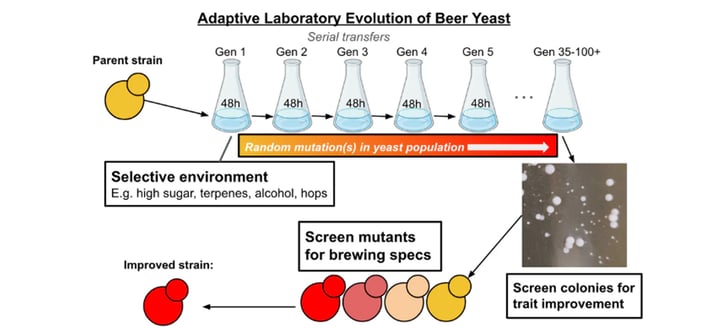
This process successfully selected for variants with improved fermentation kinetics and speed. Additionally, genomic sequencing revealed that the optimized Suava strain retained an astounding nine functional copies of the IRC7 beta-lyase gene. Most industrial beer yeasts possess inactivated or truncated IRC7genes, but Suava's genetics translate to guava, passion fruit, and white grape aromatics, releasing aromatic thiols from hops and adjuncts. The name itself is a combination of Suave (reflecting the smooth, round mouthfeel the yeast produces) and Guava (the signature tropical aromatic it frees).
What Did Brewery Testers Think?
But don’t just take it from us. A commercial evaluation involving 18 breweries across North America and Europe analyzed the performance of the strain (tested as EXP-666) in hazy, hop-forward categories such as Hazy IPAs, NEIPAs, and Hazy Pale Ales. The yeast reliably produced a stable, persistent haze, earning a haze rating of 3.8/5, and shifted the sensory profile toward tropical notes of tropical fruit (3.4/5), passion fruit (2.7/5), and white grape (2.4/5).
Notably, all 18 participating breweries reported a complete absence of diacetyl, indicating a clean fermentation profile. Most participants reported attenuation ranging from 76% to 83%.
The trials also established guidelines to address sluggish or stalled fermentations. Extended fermentation times were highly correlated with pitching temperatures below 21°C (70°F) and low pitching rates of 50g/hL. Maintaining fermentation at25°C–28°C (77°F–82°F) with a pitching rate of 75–100g/hL resolved these issues.
Furthermore, 60% of European trial participants experienced prolonged fermentations compared to 38% of North American participants. This was attributed to the lower Free Amino Nitrogen (FAN) profiles of European base malts, and the trials confirmed that adding nutrient supplements (such as
Yeast Lightning at 4g/hL) improved fermentation rates without negatively impacting aroma development.
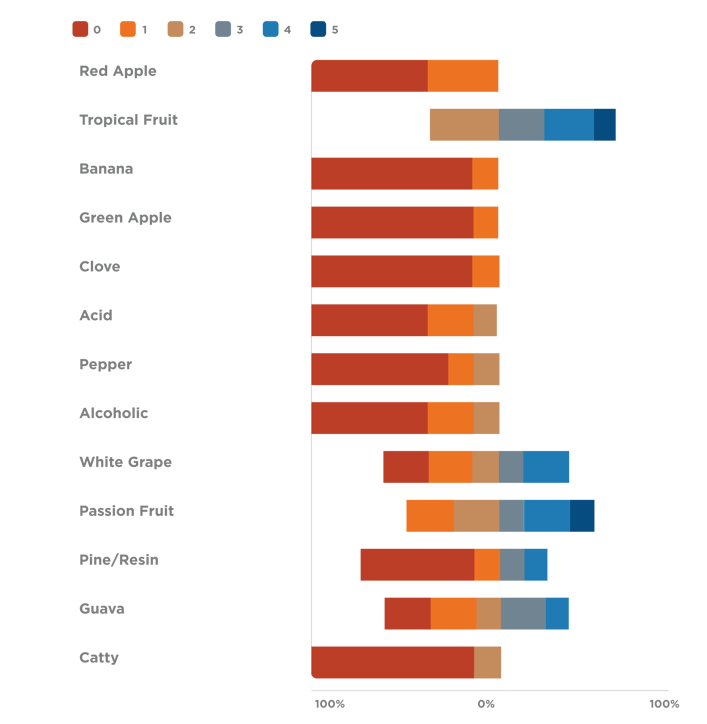
Among 18 commercial brewery trials, “tropical fruit”, “white grape”, “passionfruit” and “guava”
were the top sensory descriptors for Suava.
A Powerhouse Three-Way Collaboration
WLP079 Suava represents a unique partnership in the yeast world, leveraging the industry's top minds to benefit craft brewers:
Escarpment Laboratories (The Innovators): Handled the rigorous scientific
discovery, isolation, genetic mapping, and strain improvement via Adaptive Lab
Evolution.
Lallemand Brewing (The Producers): Managed the dry yeast manufacturing,
using their world-class dehydration expertise to produce this strain as a highly
stable, convenient, active dry yeast.
White Labs (The Distributors):
White Labs is launching this brand-new strain under their product numbering convention (WLP079 Suava). They make available commercial distribution through their Asheville, San Diego, and Copenhagen hubs, making this highly desirable strain accessible to brewers worldwide. WLP079Suava can also be purchased from Escarpment Laboratories and many other ingredient distributors globally.
Technical Specs: Brewing with WLP079 Suava
Suava is a non-GMO, POF-negative (producing zero phenolic clove-like flavors),and haze-positive strain that is perfectly suited for Hazy IPAs, Double IPAs, and Pale Ales. It yields a stable, pillowy haze and a soft, full mouthfeel with low bitterness.
Attenuation:
72% – 82%
Flocculation:
Low
Optimal Fermentation Temperature:
24°C – 30°C (75°F – 86°F)
(Crucial for fast fermentation speed and peak attenuation)
Pitch Rate:
75 – 100g/hL
Aroma & Flavor Profile:
Guava, passion fruit, white grape, and blackcurrant
Available Formats:
Dry format only (500g bricks & 11g sachets)