Proper nutrient levels are important for complete and healthy fermentations. Mead must lacks the necessary nitrogen needed for fermentation, therefore nutrient additions are a critical component of mead making.
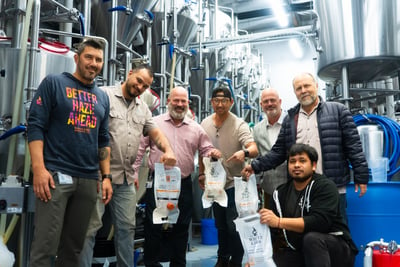
Most mead makers add their nutrients to the mead must in an incremental fashion, a process known as staggered nutrient additions (SNA). To explore this further, White Labs Research and Development team collaborated with Lost Cause Meadery to investigate the effect of staggered nutrient additions in mead making.
The mead must donated by Lost Cause Meadery, was created using orange blossom honey and water. Starting gravity was 31 Brix and the yeast assimilable nitrogen (YAN) present in the must was low at 13 ppm. Using the following equation, we determined 280 ppm YAN was ideal for our mead to have a healthy fermentation.
Sugar (g/L) x 0.90 = Parts per million of YAN required
31P x 10(Conversion P to g/L) x 0.9 = 279 ppm
Subtracting the YAN already present in the must, we needed to add approximately 270ppm of YAN for our must to reach the goal of 280ppm.
Trial 1 - Staggered Nutrient Additions
While methodologies on when to add nutrients vary from meadmaker to meadmaker, we focused on a 4 nutrient addition regime and added nutrients at the following time points: at pitch, at 24 Hours, at 48 Hours, and at ⅓ sugar break.
Note that nitrogen can be added in two different forms, organic and inorganic (Diammonium phosphate/DAP) nitrogen. Our first trial focused on the type of nitrogen (organic or inorganic) used in the 4 addition SNA, and the time in which they were added. They were as follows:
- All organic nitrogen added at the beginning of fermentation
- Organic nitrogen split up into 4 equal additions
- Organic nitrogen for the first 2 additions, and a 1:1 blend of organic/inorganic nitrogen for the last 2 additions
- A 1:1 blend of organic/inorganic nitrogen for the first 2 additions, and organic nitrogen for the last 2 additions
- A 2:1 blend of inorganic/organic nitrogen split up into 4 equal additions
- A 1:2 blend of inorganic/organic nitrogen split up into 4 equal additions
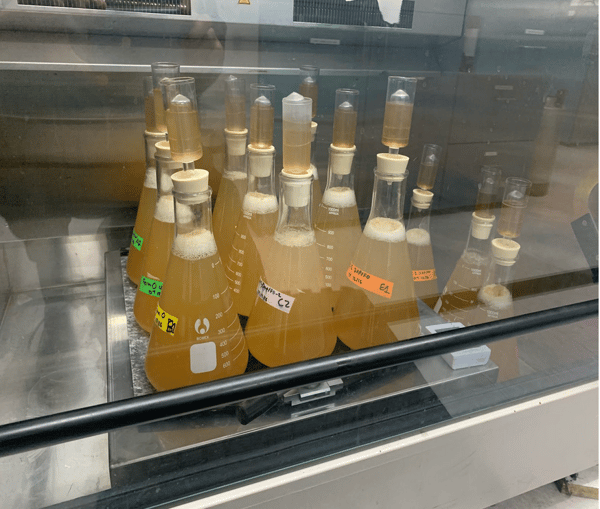 Figure 1. Mead trials being conducted at lab scale in a temperature-controlled environment
The type and addition timing of the nitrogen source was the only variable that changed, all other variables including yeast strain, temperature, must, etc. stayed the same. We monitored pH and gravity daily as well as nitrogen concentration at each point of addition. The 1-liter trials were conducted in duplicate in a temperature-controlled environment for 28 days.
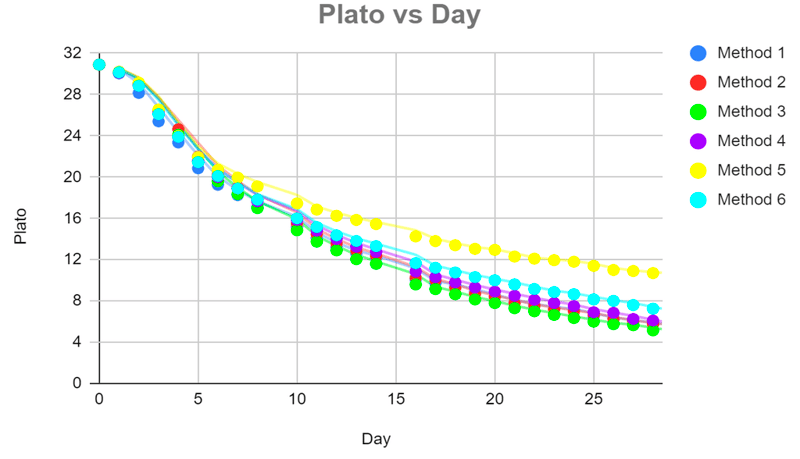 Figure 2. Fermentation kinetics of mead with different types of nitrogen added at different times
Through the kinetic data and a small sensory panel, we determined that method 3, in which we added organic nitrogen for the first 2 additions, and a 1:1 blend of organic/inorganic nitrogen for the last 2 additions, performed the best.
Trial 2 - Liquid vs Dry Yeast
After we determined our ideal nutrient regime, we investigated the effect of dry and liquid yeast on the resulting mead. We decided to test a commonly used dry wine strain against our liquid, WLP002 English Ale strain.
The must was identical to the must used in our first trial, as were the other variables except for the size of the ferments which were increased to 1.8L. Daily pH and gravity readings were recorded. At the end of fermentation, samples were taken for titratable acidity and volatile compound analysis via gas chromatography.
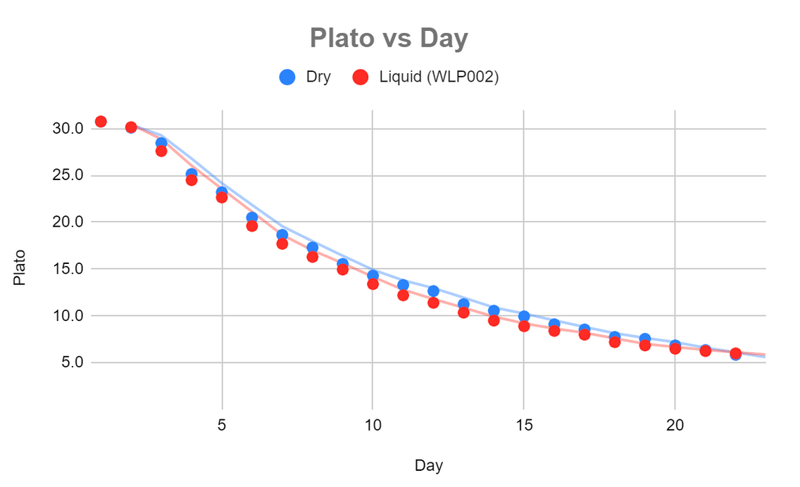 Figure 3. Fermentation kinetics from mead fermented with dry yeast vs liquid yeast
Interestingly, the liquid strain started to ferment quicker than the dry strain. Both strains completed fermentation, the dry strain finished at 14.7 % ABV(%v/v) and the liquid strain finished at 14.88 % ABV(%v/v).
Table 1. Analytical data from mead fermented with dry yeast vs liquid yeast
|
Sample Type
|
Titratable Acidity (mol/L)
|
Total Diacetyl* (ppb)
|
Amyl Alcohols (ppm)
|
Ethyl Acetate (ppm)
|
|
Dry Yeast
|
7.5
|
48.8
|
163.2
|
35.7
|
|
Liquid Yeast -
WLP002 English Ale
|
6.4
|
33.6
|
133.2
|
28.8
|
*Total Diacetyl = Combined value of diacetyl and its precursor ⍺-acetolactate
The data highlighted the importance of strain selection in the final product. Diacetyl, amyl alcohols and ethyl acetate, an ester commonly described as solvent, were all lower in the mead fermented with liquid yeast. Future studies are needed to compare liquid and dry strains of the same type (for instance a dry English strain compared to a liquid English strain).
Finding the right amount of nitrogen needed for your fermentation is crucial for proper fermentation kinetics and to avoid creating a mead riddled with undesirable flavors. Excess nitrogen can promote spoilage organism growth and too little nitrogen can create stuck fermentations and cause sulfur off-flavors.
Our data indicate that a combination of organic nitrogen and inorganic nitrogen spread out throughout the fermentation improved fermentation kinetics and produced low off-flavors. Our second trial highlighted the importance of strain selection and its effect on fermentation kinetics and volatile compounds.
Thank you Billy Beltz and Lost Cause Meadery for inviting us to collaborate on this study!Happy fermenting!