A Guide to Cider Fermentations

Guide To Cider Fermentations

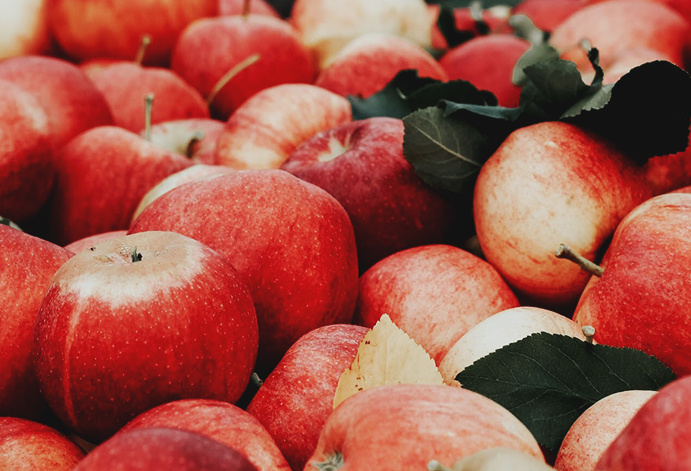
Who doesn’t love a crisp, refreshing cider in any season? The artisanal cider market is changing the way cider is perceived in America, from a sugary sweet beverage to a complex unique alternative to beer. White Labs has several products to help you create the perfect hard cider.

Yeast Choice Matters 

Many recipes for cider suggest a wine strain or a package of generic dry yeast. We’re here to tell you that yeast choice for your cider does matter.

If you don’t believe us, split your batch into two fermentations and try them side by side. We’ve seen so many beautiful ciders with some of the following liquid yeast strains: 
Yeast and Bacteria Suggestions
WLP001 California Ale Yeast
WLP002 English Ale Yeast
WLP028 Scottish Ale Yeast 
WLP101 SuperCell Yeast Blend
WLP611 New Nordic Ale Blend Yeast
WLP616 Funky Cider Blend
WLP645 Brettanomyces claussenii
WLP648 Brettanomyces bruxellensis Trois Vrai
WLP650 Brettanomyces bruxellensis 
WLP653 Brettanomyces lambicus 
WLP672 Lactobacillus brevis
WLP677 Lactobacillus delbrueckii
WLP693 Lactobacillus plantarum
WLP715 Champagne Yeast
WLP773 Scottish Cider Yeast Blend
WLP775 English Cider Yeast

A Guide to Cider Fermentations 2

Yeast Inoculation Rates

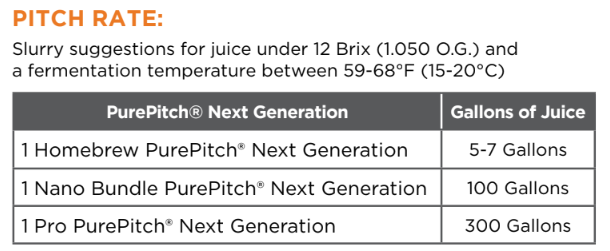
In cider, inoculation rates correlate with how fast the fermentations take place. If you’re looking for a slower fermentation to preserve fruit aroma, a lower inoculation rate can be valuable.
Cider Pitch RatesNutrients are Necessary

Nutrients should be added to warm water, dissolved, and then added before fermentation. Most must is insufficient in nitrogen; we recommend adding YAN (Yeast Assimilable Nitrogen) concentration at ~150g/BBL.

Our nutrient recommendation is SeltzerMax®as it adds nutrients to fermentation to help reduce off-flavors such as sulfur without adding additional flavor. White Labs recommendations are 5-6.5 g/gal or 150-200g/bbl.

Make It Wild

Creating a spontaneously fermented cider can be difficult. Try using alternative microorganisms to create a more unique and complex cider. WLP616 Funky Cider Blend is just a few organisms we carry to create that natural cider funk. Alternatively, check out our bacteria like Lactobacillus sp., or our wild yeasts such as Torulaspora sp. or Brettanomyces sp. to create a tart funk-forward cider. 
A Guide to Cider Fermentations 3Tips & Tricks 

  • Add nutrients at the initial yeast pitch, 24 and 48 hours later, and when gravity has dropped 50% attenuation.
  • ​Although strain dependant, a rule of thumb is to ferment warmer 59-71°F (15-22°C) for more yeast expression and influence and cooler 59-64°F (15-18°C) to keep delicate fruit flavors and aromatics.
Hard Cider Tech Sheet

Recent Posts

Featured image: Common Pitch Rate Mistakes (And How To Avoid Them)
Pitch Rate
Mar 12, 2026

Common Pitch Rate Mistakes (And How To Avoid Them)

Pitching yeast requires accurate measurements in order to quantify how many yeast cells are introduced into a batch for fermentation. This is commonly referred to as the pitch rate. A pitch rate should be treated as any other type of ingredient measurement; i.e. grist percentages, hop additions, water volumes. Accurate rates are key for consistent…

Read more
Featured image: Introducing ModiGen™D Series Yeast Strains
Feb 19, 2026

Introducing ModiGen™D Series Yeast Strains

ModiGen™D: Yeast,engineered to be smarter. Throughout the last year, White Labs and The Yeast Bay worked together to design, build, and validate a new set of bioengineered yeast strains. We set out to engineer our most popular yeast cultures to eliminate one of the most notable off-flavors in brewing: diacetyl. Considered an off-flavor in practically…

Read more
Featured image: Lab Insights: What Our Data Shows About PurePitch Next Generation Performance
Feb 4, 2026

Lab Insights: What Our Data Shows About PurePitch Next Generation Performance

TLDR: Why This Matters for Brewers Longest shelf life available for liquid yeast PurePitch Next Generation allows you to buy and store yeast longer, reducing the need for tight brew-day timing. This makes planning easier and lets you order yeast for multiple batches at once, saving on shipping costs. Consistently higher yeast quality The improved…

Read more